Showing posts with label nonfiction. Show all posts

Thursday, February 14, 2008

UML A Beginner's Guide


Jason T. Roff
2003

Knowing nothing about UML, other than a rough idea of what it is, I found this a very useful reference book and am ordering a copy for school from Fishpond.
Each module follows a similar format, addressing the topics of
  • defining the type of diagram described
  • explaining why the type of diagram is used
  • identifying the components of the diagram type
  • demonstrating how to make the diagram
Each module then offers a project that follows the "how to" steps, and then shows a model answer.
The book is supported by online diagram files (click the Code link on this page to download a zipped folder of the project diagram files).

Wednesday, February 06, 2008

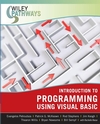
Introduction to Programming Using Visual Basic


Introduction to Programming Using Visual Basic by Petroutsos et al
2008
978-0-470-10188-9

I found this book by chance on the library shelf and have ordered a copy to use with my second and third year programming students this year - coincidentally we have just made the move from VB 6 to VB 2005, which is the version used by this book. I have read as far as Chapter 8 and have found the explanations and examples to be pitched right to make sense. It is also good to see a student website that supports the book with pre-tests, post-tests and files to download.

Sunday, January 20, 2008

The Design of Future Things


The Design of Future Things by Donald Norman
2007
ISBN 978-0-465-00227-6

This author is a guru of design, and I have his "The Design of Everyday Things" aka
"Psychology of Everyday Things" also in my reading pile - not being a library book it is getting less attention, in spite of having better pictures!
One thing that really impressed me was the author's willingness to admit to changing his maind about things in a public forum - shows integrity.
The book talks about intelligent cars and smart houses which are being developed in research facilities now. It discusses rules for good design, and considers (in a playful Afterword) how machines might feel about people. An interesting discussion is the difference between automation and augmentation. I think it was a green book with dormouse in the title (John Markoff's What the Dormouse Said ) which first alerted me to the centrality of this debate in the early years of computr design and development.